







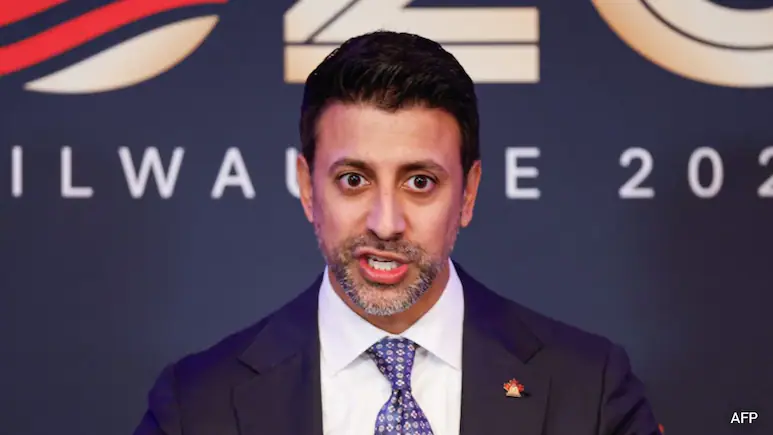
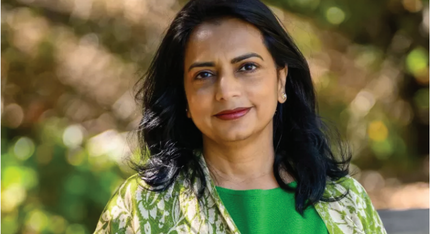
Pleasanton, California: For entrepreneur and community volunteer Reena Gupta, public service did not begin with a political campaign. For years, she believed meaningful change could be created outside elected office—by helping community organisations, mentoring women returning to the workforce, serving on local commissions and supporting young people as they explored new career opportunities. That approach, however, has now led her into electoral politics. Gupta is running for the District 3 seat on the Pleasanton City Council, saying she wants to make local government more accessible and encourage residents to become more involved in decisions that directly affect their everyday lives. For Gupta, the decision to enter politics is not a departure from her entrepreneurial career. Rather, she sees it as another form of problem-solving—an opportunity to bring the creativity, innovation and community-building mindset of an entrepreneur into local government. “It’s about making sure every resident has a place at the table,” Gupta told New India Abroad, emphasising that decisions made at City Hall can have a direct impact on residents’ daily lives. For Gupta, the decision to enter politics is not a departure from her entrepreneurial career. Rather, she sees it as another form of problem-solving—an opportunity to bring the creativity, innovation and community-building mindset of an entrepreneur into local government.“It’s about making sure every resident has a place at the table,” Gupta told New India Abroad, emphasising that decisions made at City Hall can have a direct impact on residents’ daily lives.
From Community Service to Public Office
Gupta’s interest in civic service began soon after she moved to the United States. While living in Nashville, Tennessee, she volunteered at a Hindu temple and used her background in software to help modernise its operations. Her community involvement later expanded to schools, nonprofit organisations and local government initiatives in Pleasanton. She served on the Pleasanton Economic Vitality Commission, the Pleasanton Unified School District Career Technical Education Advisory Board and Pleasanton Connects, a civic initiative focused on bringing residents from different backgrounds together. Those experiences reinforced her belief that communities often have more in common than political or social differences suggest. By listening to residents and working with people from different backgrounds, Gupta said she came to understand that most people share similar aspirations—wanting to live peacefully, respect one another and build a better future for their families. For her, community service also provided a sense of fulfilment that professional success alone could not offer. “The fulfillment that you get by serving the place and making a difference in someone’s life… no money can buy that,” she said. Eventually, Gupta felt that volunteering from outside the political system was no longer sufficient. She began to believe that she could make a greater contribution by taking part in the decision-making process itself.
Making Civic Engagement the Focus
Gupta says her campaign is centred less on asking residents for votes and more on encouraging them to understand how their local government works. According to her, many residents are unaware of what is discussed at City Hall, how decisions are made or how those decisions can affect their neighbourhoods, businesses, schools and families. Instead of beginning her campaign with the traditional message of asking people to “vote for me,” Gupta said she began by asking residents questions about their knowledge of local government and their vision for Pleasanton. She believes this lack of awareness represents a significant disconnect between residents and local government. Her response is a stronger focus on civic engagement—encouraging people to participate in public discussions, understand council decisions and share their views before major decisions are made. Gupta has already started sharing simplified explanations of City Council discussions and encouraging residents to provide feedback. She believes that public participation should extend beyond Election Day and become a regular part of community life.
A ‘Human Library’ for the Community
Among Gupta’s ideas is the creation of a “Human Library”, a concept designed to connect residents who have expertise in particular areas with others who want to learn.
Under the idea, residents could volunteer their knowledge and experience in areas ranging from professional skills to hobbies and specialised fields. Gupta compares the concept to a traditional public library, where people access books for knowledge. “We all have people who are experts in something, and there are people who are ready to learn,” she said, arguing that residents themselves can become a valuable source of knowledge for the wider community. The proposal reflects her broader belief that local communities already possess many of the resources needed to solve their own problems—if residents are given opportunities to connect and collaborate. Entrepreneurial Experience Shapes Her Approach
Gupta believes entrepreneurship has prepared her for the challenges of public office because both entrepreneurship and government ultimately involve solving problems. “Entrepreneurship boils down to one word… it’s problem solving,” she said.
She argues that entrepreneurs are not simply people who create businesses. They also develop a vision, bring people together and motivate them to work towards common goals. That philosophy has influenced the way she approaches her campaign. Rather than focusing solely on political promises, she says she wants to identify problems through conversations with residents and then develop practical solutions. Her experience as an entrepreneur has also shaped her approach to workforce issues, particularly the challenges faced by women who take career breaks.
Helping Women Return to Work
After becoming a mother in 2002, Gupta decided to establish her own company rather than leave the workforce. Her experience eventually inspired her to create Mom Relaunch, an initiative designed to help women return to professional life after career breaks. Her first employee was a stay-at-home mother whom Gupta trained before helping her transition into professional work. The initiative later developed into the Mom Relaunch Foundation, which has helped more than 250 women return to employment through mentoring, practical experience and flexible work opportunities. Many of those women are immigrant mothers and spouses who had stepped away from their careers because of family responsibilities. Gupta believes flexibility is particularly important in helping women re-enter the workforce. With artificial intelligence transforming workplaces, the organisation has also expanded its focus to helping women become more AI-ready and adapt to changing professional demands.
Values Shaped by Her Indian Upbringing
Although Gupta has spent decades in the United States, she says her approach to community and public service is deeply influenced by her upbringing in India. She grew up in a large multigenerational family with 21 cousins spread across four families. Daily life revolved around shared meals, celebrations and collective responsibilities. Growing up in such a large family taught her how to live with people who had different personalities, opinions and expectations. She believes those experiences helped her understand the importance of listening, compromise and respecting differences. Gupta says her upbringing taught her that disagreement does not necessarily have to divide people and that communities can remain united when individuals respect one another’s views.
Building Pleasanton’s Economy
If elected to the City Council, Gupta says one of her immediate priorities would be strengthening Pleasanton’s economic base while preserving the qualities that make the city attractive to residents. Rather than increasing taxes, she wants to explore ways to expand the city’s revenue base by attracting businesses, new residents and visitors. “How can we increase the revenue base, not the tax rate?” she asks. Gupta believes Pleasanton should actively promote itself as a destination for businesses, families and tourists. She describes the city as needing an advocate who can promote its strengths and attract new economic opportunities. Her approach combines economic development with community preservation, with an emphasis on ensuring that growth does not undermine the character and quality of life valued by existing residents.
Encouraging Indian Americans to Serve
Gupta also sees the increasing involvement of Indian Americans in local politics and civic life as part of a broader generational journey. She credits earlier generations of Indian immigrants with creating opportunities and establishing a foundation that has enabled younger Indian Americans to become more active in American society. For those considering a future in public service, Gupta’s advice is straightforward: begin by volunteering. She encourages young Indian Americans to work with nonprofits, participate in community initiatives and experience the satisfaction of serving others before considering elected office.
From Service to Leadership
Gupta’s journey from technology entrepreneur and community volunteer to political candidate reflects a broader evolution in her understanding of public service. For years, she believed she could make a difference without holding elected office. Now, as she seeks a seat on the Pleasanton City Council, Gupta says her goal is not simply to win an election but to create a stronger connection between residents and their local government. For her, civic engagement begins with listening, continues through participation and ultimately leads to collective problem-solving. Her campaign is built around the belief that when residents understand how their city works—and feel that their voices matter—they can play a more meaningful role in shaping its future.