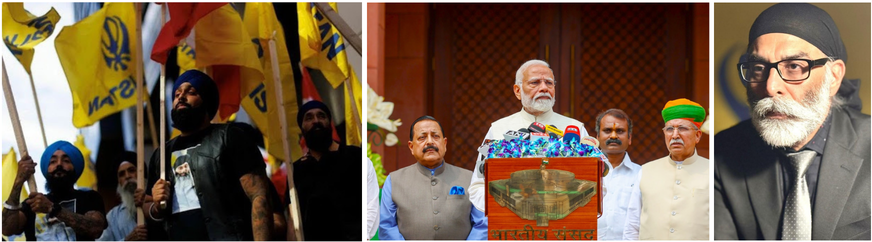




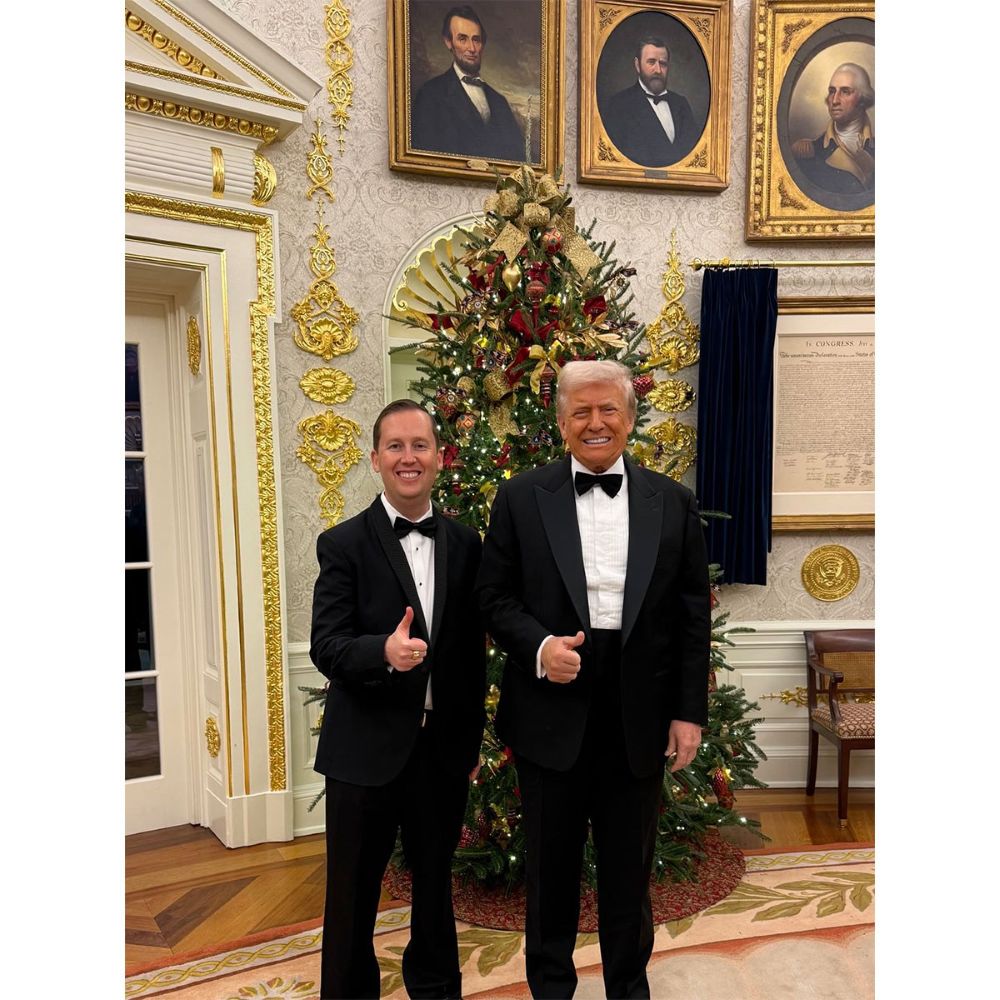





The allegations surrounding the assassination of Canadian Sikh leader Hardeep Singh Nijjar and the foiled murder-for-hire plot targeting Sikh activist Gurpatwant Singh Pannun have evolved into one of the most consequential diplomatic and law enforcement controversies involving India, Canada, and the United States in recent decades. Beyond the criminal investigations themselves lies a larger question that democracies cannot afford to ignore: whether the principles of sovereignty, accountability, and the rule of law can withstand the pressures of geopolitical and economic interests. According to unsealed indictments filed by the U.S. Department of Justice, federal prosecutors allege that Indian national Nikhil Gupta acted at the direction of an Indian government official, identified in subsequent court filings as Vikash Yadav, to orchestrate the assassination of Gurpatwant Singh Pannun on American soil. The alleged conspiracy was disrupted only because the purported hitman was, in reality, an undercover U.S. law enforcement officer. The court filings, supported by intercepted communications and surveillance evidence presented by prosecutors, describe an alleged transnational murder-for-hire operation that extended beyond the United States. Prosecutors contend that conversations between Gupta and his alleged handler referenced the June 2023 killing of Hardeep Singh Nijjar in Surrey, British Columbia, suggesting a broader pattern of targeting Sikh separatist activists. These allegations remain before the courts, and the criminal proceedings continue. The significance of the case extends beyond individual defendants. Senior American officials, including the Attorney General and leaders of the Federal Bureau of Investigation and Drug Enforcement Administration, publicly characterized the alleged plot as an example of transnational repression and emphasized that no individual would be beyond the reach of U.S. law, regardless of official position.
Canada has pursued a parallel investigation into Nijjar’s killing. Since September 2023, Canadian officials have repeatedly stated that they possessed credible intelligence linking agents of the Government of India to the assassination. The Royal Canadian Mounted Police later announced that investigators had uncovered evidence suggesting connections between individuals associated with the Indian government and organized criminal networks operating in Canada. These statements represented one of the strongest public accusations ever made by Canada against a foreign government.
India, however, has consistently rejected these allegations. New Delhi has denied directing or participating in assassination plots abroad, dismissed the accusations as unfounded, and maintained that no credible evidence has been shared publicly to substantiate the claims. Indian officials have also stated that individuals identified in foreign indictments are no longer associated with the government. The recent announcement by U.S. authorities of a sweeping crackdown on transnational criminal organizations operating in North America has renewed attention to these cases. While law enforcement officials announced dozens of indictments and arrests involving organized crime networks, the public statements focused primarily on criminal organizations rather than reiterating earlier allegations concerning state involvement. This change in emphasis has prompted questions among observers and advocacy groups regarding whether diplomatic considerations are beginning to influence public messaging.
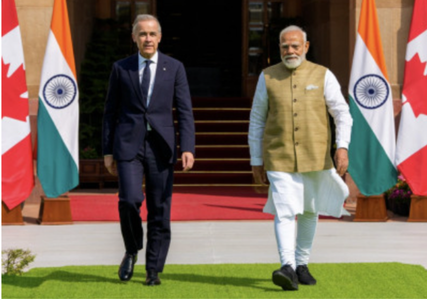
Critics argue that as Canada and India seek to restore diplomatic and economic relations, references to alleged state involvement have become less prominent in official communications. Supporters of renewed engagement contend that improving bilateral relations need not interfere with independent criminal investigations and that diplomacy and justice can proceed simultaneously.
This tension highlights a difficult reality confronting democratic governments. Nations have legitimate interests in strengthening trade, security cooperation, and geopolitical partnerships. Yet these objectives cannot come at the expense of transparency or accountability where allegations involving political violence and violations of national
confidence in democratic institutions depends upon the perception that justice is administered consistently, irrespective of political convenience.
The allegations themselves remain serious, but they are also contested. In democratic societies governed by the rule of law, guilt is determined in courts—not through political statements, media reports, or public opinion. Ongoing criminal proceedings in the United States and investigations in Canada must therefore be allowed to proceed independently, free from political interference or diplomatic pressure.
The broader issue is not confined to relations among India, Canada, and the United States. Democracies worldwide increasingly face allegations of transnational repression, in which governments are accused of intimidating, surveilling, or targeting dissidents beyond their borders. If such allegations are proven, they represent a direct challenge to international law, national sovereignty, and the safety of diaspora communities. If they are not proven, independent judicial processes remain the appropriate mechanism for establishing that conclusion.
Ultimately, the credibility of democratic institutions rests on a simple principle: allegations of serious criminal conduct must be investigated impartially, evidence must be tested in open court, and accountability must apply equally to individuals regardless of nationality or position. Diplomatic engagement and economic cooperation are essential components of international relations, but they cannot replace the obligation to pursue justice wherever credible evidence leads.
As these investigations continue, governments must resist the temptation to subordinate the rule of law to short-term political or economic priorities. The enduring strength of democratic societies lies not in their ability to avoid difficult questions, but in their willingness to confront them through transparent institutions, independent courts, and unwavering respect for justice.