







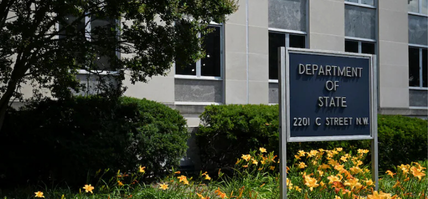
Washington: The United States is planning to close five of its diplomatic missions overseas in what would mark a rare reduction in the country’s global diplomatic presence, according to people familiar with a notification sent by the US State Department to Congress. The proposed closures include the US mission in St. George’s, Grenada, as well as consulates in Winnipeg, Canada; Nagoya, Japan; and Medan, Indonesia. The US is also planning to close its embassy branch office in Douala, Cameroon, according to the notification. The details were shared with congressional committees late last week. The people familiar with the notice spoke on condition of anonymity because the notification has not been made public. If implemented, the closures would represent an unusual move for the United States, as shutting multiple overseas missions simultaneously is relatively uncommon, particularly when it is not directly linked to a specific geopolitical crisis or security situation. The proposed closures come amid a broader effort by the Trump administration to reduce government spending and restructure the federal bureaucracy in line with its “America First” policy. Preparations to close nearly a dozen US diplomatic missions began during the early months of the Trump administration last year, according to reports at the time. The White House Office of Management and Budget had reportedly pushed for an even wider reduction, with proposals involving the closure of as many as 30 foreign missions. Some administration officials have argued that maintaining smaller diplomatic posts can be expensive and that certain missions do not provide sufficient strategic or operational value to justify their costs.
The State Department also underwent a major bureaucratic restructuring last year, resulting in the elimination of dozens of bureaus and hundreds of positions. However, no overseas diplomatic missions were ultimately closed during that process. The proposed closures have raised concerns among Democrats and some former US foreign policy and national security officials. Critics argue that reducing America’s diplomatic presence overseas, alongside the dismantling of the US Agency for International Development (USAID), could weaken US influence abroad. They warn that a reduced American presence could create opportunities for countries such as China and Russia to expand their influence in regions where Washington has traditionally maintained a diplomatic footprint. The USAID cuts have also attracted criticism because the agency previously administered billions of dollars in international assistance programmes. Supporters of the restructuring, however, argue that the US diplomatic network needs to be more focused, efficient and financially sustainable. The State Department did not directly confirm the planned closures when asked for comment on Sunday. In a statement, the department said it was focused on ensuring that the US diplomatic footprint remained efficient and effective and added that it would follow the required congressional notification procedures. US Secretary of State Marco Rubio has defended the administration’s cost-cutting measures, describing them as necessary to “right-size” a department that conservatives have long criticised as overly large and bureaucratic. The five locations serve different diplomatic functions.
The US mission in St. George’s, Grenada, is an embassy. The posts in Winnipeg, Nagoya and Medan are consulates, while the facility in Douala operates as an embassy branch office.
US embassies are generally located in national capitals and serve as the primary diplomatic mission in a country. Consulates and branch offices typically provide services and represent US interests in other major cities and regions.
The proposed closures would therefore reduce America’s diplomatic presence not only in capitals but also in strategically important regional centres.
The move also comes against the backdrop of growing US competition with China for diplomatic and strategic influence around the world.
During the administration of former President Joe Biden, the United States opened several new diplomatic missions, particularly in the Pacific, as Washington sought to strengthen its presence in a region where China has been expanding its influence.
China currently has diplomatic representation in St. George’s, Nagoya and Medan, although it does not maintain functioning foreign missions in Winnipeg or Douala.
The proposed US closures could therefore have implications beyond cost savings, particularly in locations where Washington and Beijing are competing for diplomatic and economic influence.
The State Department’s congressional notification is the first indication that the Trump administration may be moving ahead with a new round of overseas mission closures as part of its wider effort to reshape the US diplomatic establishment.