







New Delhi: The Ministry of External Affairs (MEA) has rejected as “fake news” reports claiming that India had approached Israel to negotiate a defence pact in response to the recently announced security arrangement involving Pakistan, Saudi Arabia and Turkey.
The claim originated with Turkish media outlet Straturka and subsequently gained traction on social media platforms. The report, citing unnamed Pakistani sources, alleged that New Delhi had initiated discussions with Tel Aviv to establish a defence agreement aimed at countering the emerging trilateral security framework involving Pakistan, Saudi Arabia and Turkey. The MEA has categorically denied the claim. Its Fact Check unit shared a screenshot of the report on X and labelled it “fake news”, warning social media users against circulating unverified information.
“We caution against such malicious posts on social media platforms which use AI to create fake content!” the MEA Fact Check wing said in its post. The ministry’s response comes amid heightened attention to the evolving security and strategic landscape in West Asia and South Asia, following the signing of a defence agreement between Pakistan, Saudi Arabia and Turkey.
The report alleging an India-Israel defence pact suggested that New Delhi was seeking to establish a counterweight to the Pakistan-Saudi-Turkey security arrangement. However, the MEA said there was no basis for the claim and classified the report as fake. The ministry also cautioned the public against relying on social media posts and reports that may use artificial intelligence to generate misleading or fabricated content.
The clarification is significant as claims concerning military alliances and defence agreements can quickly gain traction online, particularly when they involve countries with complex strategic relationships. The MEA’s Fact Check mechanism has previously issued clarifications on misleading claims concerning India’s foreign policy, diplomatic engagements and international relations. The disputed report surfaced after Pakistan, Saudi Arabia and Turkey announced the “Mecca Joint Defence Agreement”, a framework aimed at strengthening military coordination and security cooperation among the three countries.
The agreement has attracted international attention because of its provision for collective security among the signatories.
Pakistan’s Foreign Ministry said the agreement seeks to strengthen collective deterrence and enhance cooperation in the defence and security sectors.
According to Pakistan, the agreement includes a provision under which an armed attack against any one of the three countries would be regarded as an attack against all three.
The framework also provides for expanded cooperation across multiple areas of defence and security, although the precise scope and implementation of the arrangement will depend on subsequent cooperation among the participating countries. The agreement has prompted discussions about its possible implications for the wider regional security environment, including its impact on existing strategic partnerships and alignments.
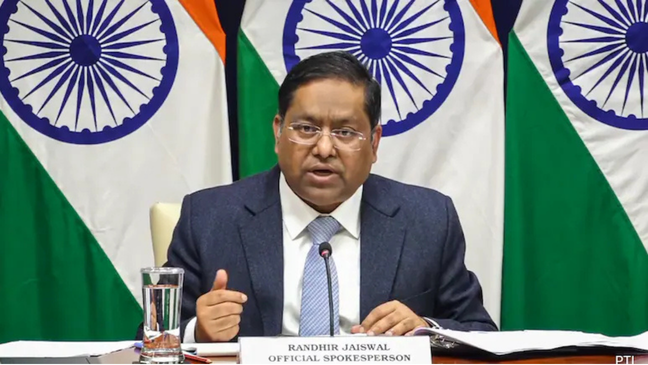
While rejecting the reports of an India-Israel defence pact, New Delhi has confirmed that it is closely monitoring developments surrounding the Pakistan-Saudi-Turkey agreement. During the MEA’s weekly media briefing on Friday, spokesperson Randhir Jaiswal said India was following the development and would provide further information as the situation evolved. “This is also a development that we are closely following, and we shall keep you updated,” Jaiswal said.
The statement indicates that New Delhi is assessing the implications of the new trilateral security arrangement, even as the government has not announced any new defence pact with Israel in response to it.
India maintains strategic and diplomatic relationships with all three countries involved in the new framework, although its ties with each country are shaped by different political, economic and security considerations.
The MEA’s clarification also came a day after Prime Minister Narendra Modi spoke with Israeli Prime Minister Benjamin Netanyahu over the telephone.
According to the Indian government,
the two leaders discussed ways to further strengthen the India-Israel Special Strategic Partnership and reviewed cooperation between the two countries across a range of sectors.
The conversation took place amid continuing developments in West Asia and growing international attention on regional security.
At Friday’s media briefing, Jaiswal clarified that the telephone call had been initiated from the Israeli side.
“During the conversation, it was discussed as to how we can further strengthen this bond, this friendship that we have with Israel across various sectors,” Jaiswal said.
The MEA’s statement highlighted the continuing importance of the India-Israel relationship, which encompasses areas including defence, security, technology, agriculture, innovation and other sectors.
However, the ministry did not link the Modi-Netanyahu conversation to the Pakistan-Saudi-Turkey defence agreement.
The developments have led to speculation on social media about whether India could respond to the emerging trilateral security framework by deepening its strategic and defence cooperation with Israel.
The MEA’s Fact Check unit, however, has specifically rejected the claim that India had requested Israel to sign a new defence pact for this purpose.
The government has not announced any such agreement or confirmed that negotiations are underway for a new India-Israel defence treaty aimed at countering Pakistan, Saudi Arabia and Turkey.
The episode also underscores the growing challenge posed by misinformation and AI-generated content in the field of international affairs. Unverified claims involving military alliances, diplomatic agreements and strategic partnerships can quickly influence public perceptions before official sources have an opportunity to respond.
The MEA’s warning therefore urged social media users to exercise caution and verify sensitive foreign-policy claims through official government sources.
For now, India continues to monitor the Pakistan-Saudi-Turkey security arrangement while maintaining its existing strategic partnership with Israel. The government’s latest clarification makes clear that the reported move to establish a new India-Israel defence pact as a counter to the trilateral agreement is not supported by official information and has been dismissed by the MEA as fake news.