






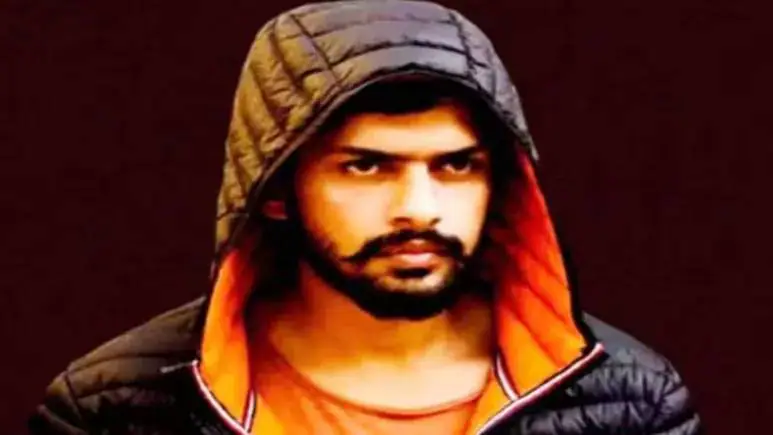
New Delhi: The Lawrence Bishnoi gang allegedly exploited Canada’s student visa and work permit system to expand its criminal network and recruit young people from India for organised criminal activities, according to a classified intelligence report prepared by the Canada Border Services Agency (CBSA). The report, titled “The Bishnoi Gang: An Emerging Threat in Canada,” was prepared in December 2025 as a tactical document for Canadian border and immigration officials. It was intended to provide authorities with an assessment of the gang’s operations, recruitment methods, networks and activities in Canada. A version of the confidential document was subsequently made public during court proceedings. The findings were reported by Canada’s Global News.
According to the report, the gang recruited young people from India who travelled to Canada on study permits and allegedly used some of them for activities including extortion, shootings, murder and other forms of organised crime. The report said the gang initially focused much of its activity on Khalistan supporters and Punjabi businessmen. However, by 2025, its extortion network had reportedly expanded to include members of other Indian-origin communities in Canada.
Crimes Involving Indian Students
The report highlighted a sharp rise in crime-related cases involving Indian citizens on Canadian study permits.
According to the document, overall extortion cases in Canada declined by around 10 per cent in 2024. In contrast, extortion cases involving Indian citizens increased by 47 per cent during the same period. The report further stated that crimes reported against Indian citizens holding study permits rose by approximately 8,800 per cent between 2016 and 2024. Between 2019 and 2023, around 4,000 Indian students were charged with a combined 17,929 criminal offences, according to the report. Of these, 4,920 charges were linked to serious or organised crime. Approximately 97 per cent of those serious offences were classified as violent crimes. The report said that in 2024 alone, 13,040 criminal charges were recorded against Indian study-permit holders. However, the CBSA document also placed these figures in context, noting that the 2,418 Indian students charged in 2024 represented only about one per cent of the approximately 188,125 Indian students in Canada at the time. The figures therefore do not suggest that criminal activity was widespread among Indian students as a group. Rather, the report identified specific cases and networks that Canadian authorities considered relevant to organised crime and immigration enforcement.
Bishnoi Gang Shooters Mentioned in Report
The CBSA report also detailed several cases involving individuals who allegedly became associated with the Lawrence Bishnoi gang after arriving in Canada as international students. The document linked the gang’s expansion in Canada to a series of violent incidents and extortion operations, particularly in British Columbia, Alberta and Ontario. The report referred to the murder of Hardeep Singh Nijjar and said that, following the killing, the Bishnoi gang claimed responsibility for the murder of Sukhdul Singh Gill, who was described as a member of the rival Bambiha gang. According to the report, the gang subsequently expanded its extortion activities across several Canadian provinces.
Abhjeet Kingra Case
One case highlighted in the report was that of Abhjeet Kingra, who arrived in Canada on a student visa in 2018 and was later identified by authorities as a shooter associated with the Bishnoi gang. At a deportation hearing, Kingra reportedly said he had been facing financial difficulties before being drawn into criminal activity. According to the report, he was offered 4,000 Canadian dollars to participate in a shooting. In September 2024, Kingra allegedly fired 14 bullets at the residence of Punjabi singer AP Dhillon in Colwood, British Columbia. An accomplice reportedly set fire to vehicles parked outside the property. Investigators believed the attack was connected to a network associated with Rohit Godara, according to the report. Kingra was subsequently convicted and ordered to be deported from Canada. The case was cited by the CBSA as an example of how individuals who initially entered Canada through legitimate immigration channels could later become involved in organised criminal networks.
Other Students Named
The report also mentioned Jashandeep Singh and Arshdeep Singh, both of whom reportedly entered Canada as Indian students. According to investigators cited in the document, Jashandeep met Arshdeep at Campbell College in Edmonton. Authorities subsequently linked the two to the Lawrence Bishnoi network. The report said police alleged that Arshdeep worked directly for Goldy Brar, a key figure associated with the Bishnoi gang. The cases have raised concerns among Canadian authorities about the recruitment of vulnerable young people who arrive in the country for education but later become involved in organised criminal networks.
Goldy Brar Described as Key Canadian Operator
The CBSA report identified Goldy Brar as one of the most important figures in the Lawrence Bishnoi gang’s North American operations. Brar, described in the report as a close aide of Lawrence Bishnoi, arrived in Canada in 2017 on a student visa. He reportedly claimed that he intended to study at Thompson Rivers University in British Columbia. However, the report said government records did not clearly establish whether Brar actually pursued his studies. Instead, Canadian authorities alleged that he became involved in developing the gang’s network in Canada and elsewhere in North America. The Refugee Protection Division subsequently declared his application abandoned and closed the case. According to the CBSA report, Brar continued to expand the gang’s network during this period. Citing US indictments, the report alleged that Brar recruited young Indian nationals living in cities such as Edmonton and Brampton. Some of those individuals were reportedly in Canada on study or work permits. The report portrayed the alleged recruitment network as a significant concern for Canadian law enforcement because individuals who entered the country through legal immigration channels could subsequently be drawn into organised criminal operations.
Extortion Identified as Gang’s Primary Activity
The CBSA report identified extortion as the Lawrence Bishnoi gang’s primary criminal activity in Canada. According to the document, members of the network allegedly targeted South Asian businessmen and used WhatsApp calls and messages to demand large sums of money, in some cases amounting to millions of dollars. The threats reportedly involved demands for payment accompanied by warnings of violence.If a target refused to comply, attackers allegedly fired at homes, shops, restaurants or other business premises associated with the victim. The report said such attacks were intended not only to punish individuals who refused to pay but also to create fear among other members of the community. In several cases, attackers allegedly recorded videos of their actions and later shared them on social media while claiming responsibility in the name of the Lawrence Bishnoi gang. According to the report, the use of social media was part of an intimidation strategy. By publicly claiming responsibility for attacks, the network could create the impression that it had a much wider reach and capacity for violence, potentially encouraging other business owners to comply with extortion demands.
Goldy Brar’s Name Used in Threats
During investigations into extortion cases, Canadian police reportedly found that threats were frequently made in the name of Goldy Brar.
However, the CBSA report also included an important qualification: authorities were not able to establish that Brar personally issued every threat attributed to him. In some cases, investigators believed that criminals may have invoked Brar’s name to increase the credibility of their threats and intimidate victims.
The distinction is significant because the use of a prominent gang figure’s name does not necessarily establish that the individual personally directed every criminal act carried out in his name.
Growing Concern Over Recruitment
The findings of the CBSA report have highlighted growing concerns among Canadian authorities about the recruitment of young people into organised crime networks. The report suggests that some individuals who initially entered Canada as students or temporary workers were allegedly later drawn into criminal activities through financial incentives, personal connections or pressure from established criminal networks. The issue has also brought renewed scrutiny to the country’s temporary immigration system, particularly the movement of young people into Canada on study and work permits. At the same time, the figures cited in the report need to be viewed in context. The vast majority of Indian students in Canada are not involved in criminal activity, and the report itself noted that those charged in 2024 represented only around one per cent of the Indian students in the country. The CBSA assessment nevertheless indicates that Canadian authorities are paying closer attention to organised crime networks that allegedly recruit foreign nationals and use legitimate immigration channels as an entry point for expanding criminal operations. The report’s findings are likely to add to the broader debate in Canada over border security, temporary immigration, international students and the measures required to prevent organised criminal groups.