













Lutnick says India offers an “extraordinary opportunity” for AI cooperation; both nations aim to build an integrated AI technology stack
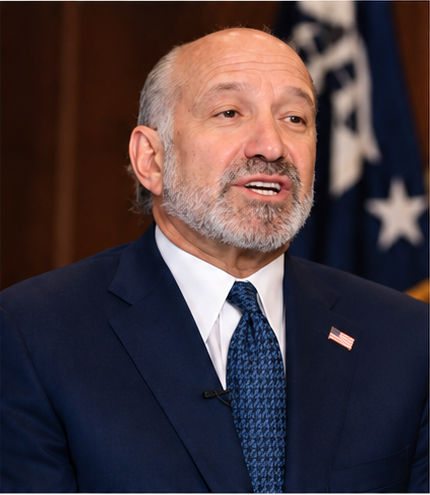
Washington, D.C. — The United States sees India as an “extraordinary opportunity” for artificial intelligence cooperation and is working with New Delhi to develop an integrated AI technology stack, U.S. Commerce Secretary Howard Lutnick has said.
Speaking to reporters at the conclusion of the G20 Innovation Ministerial in Chapel Hill, North Carolina, Lutnick said the two countries were exploring ways to combine their technological strengths and create an ecosystem capable of supporting AI development and adoption on a global scale.
The remarks followed discussions involving Lutnick and Michael Kratsios, Director of the White House Office of Science and Technology Policy and science adviser to the President. The officials said G20 members had reached consensus on a ministerial statement focused on innovation, investment and economic growth.
AI STACK TO CREATE NATIONAL CHAMPIONS
Lutnick said the emerging AI ecosystem could provide countries with opportunities to develop their own national champions in specialised areas while continuing to work with leading American AI models and technology companies.
According to Lutnick, the most advanced frontier AI models are currently being developed in the United States. Washington wants its technology stack to integrate with the national systems of partner countries, allowing them to build domestic capabilities while benefiting from American technological advances.
He said countries would ultimately have the choice of whether to use frontier models or open-weight models, depending on their individual priorities and requirements.
AI AND THE FUTURE OF SCIENTIFIC RESEARCH
Kratsios said the ministerial discussions also highlighted the increasingly important role of AI in scientific research.
AI, he noted, is expected to have a significant impact across disciplines including chemistry, mathematics, physics and materials science. He stressed the importance of encouraging researchers and scientific institutions to incorporate AI into their work in order to accelerate discovery and innovation.
For India, such an approach could create opportunities to combine the country’s large scientific and engineering talent pool with advanced AI technologies, potentially strengthening research and commercialisation.
CAROLINA PRINCIPLES FOR RESPONSIBLE INNOVATION
The two-day meeting concluded with agreement on the Carolina Principles for Emerging Technology, a framework intended to guide governments in supporting the discovery, development and deployment of new technologies.
The principles encourage investment in foundational research, stronger pathways from technological development to commercialisation and wider adoption of trusted technologies. They also recommend using existing sector-specific regulations where appropriate while introducing new rules only when genuinely new technological challenges require them.
The framework reflects a broader G20 effort to promote innovation while ensuring that emerging technologies are developed and adopted responsibly.
GLOBAL CONSENSUS AMID POLITICAL COMPLEXITIES
Lutnick described the agreement among G20 members as the outcome of extensive negotiations. He acknowledged that political differences can make consensus difficult in international forums, but said the final agreement demonstrated the ability of major economies to cooperate on shared technological and economic priorities.
He emphasised that the United States wants American AI technologies to be available globally, while individual countries should determine which models and systems best suit their national needs.
EXPANDING U.S. AI EXPORTS
Kratsios also highlighted the Trump administration’s American AI Exports Program, which is designed to make U.S. semiconductor chips, AI models and applications available to partner countries and allies.
The initiative reflects Washington’s broader strategy of expanding the international use of American AI technologies and strengthening cooperation with countries that are developing their own AI capabilities.
A STRONGER INDIA–U.S. TECHNOLOGY PARTNERSHIP
India’s position as a G20 member gives it an important platform for cooperation with the United States and other major economies. The two countries have already expanded collaboration in areas including artificial intelligence, semiconductors, quantum technology, telecommunications and scientific research.
AI is increasingly becoming a central pillar of the broader India–U.S. strategic partnership. Greater cooperation could allow India to strengthen its domestic technology ecosystem while giving American companies access to one of the world’s largest and fastest-growing technology markets.
The latest G20 discussions therefore point toward a partnership in which American frontier technologies and India’s growing scientific, engineering and entrepreneurial capabilities could work together to shape the next phase of global AI development.