











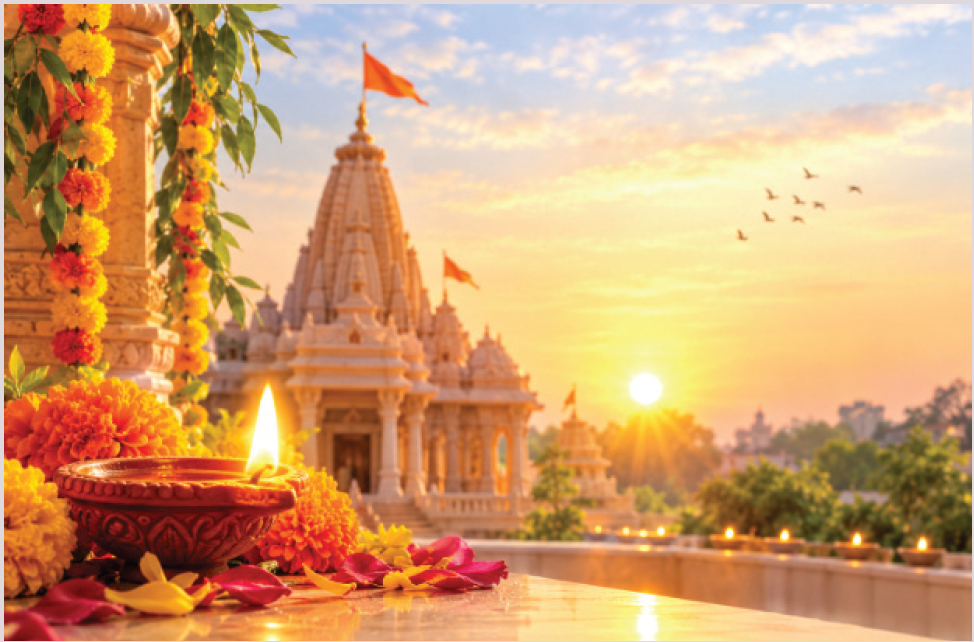
Amid rising hate and polarization, the festival of lights offers a powerful reminder of unity, tolerance and hope for a stronger, more inclusive America.
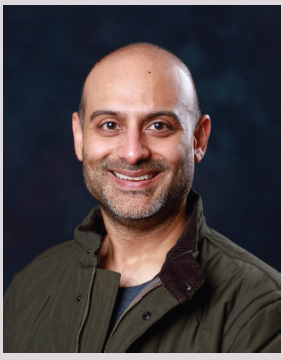
By Samir Kalra
Two years ago, I wrote in this very paper about the growing presence of Diwali in America and how it was leaving a lasting mark on American culture. From festive products and food to Diwali-themed displays in major retail chains like Costco, Target and T.J. Maxx, its popularity was spreading across the country, embraced by people of all backgrounds. I saw this as a sign of the rising influence and acceptance of Indian Americans in the U.S.
But just two years later, the reality feels far more sobering.
Today, Indian and Hindu Americans are increasingly being targeted as political scapegoats. What was once a celebration of cultural exchange has been overshadowed by a wave of hate, hostility and unwarranted scrutiny.
The Growing Wave of Hate
The so-called “Indian Question” — which questions whether we are truly American, or whether our traditions and values are compatible with American values — has fueled a disturbing rise in anti-Indian and anti-Hindu rhetoric.
In California, 23% of all religiously motivated hate incidents were anti-Hindu, the second highest after anti-Jewish incidents. Anti-Indian slurs increased by 115% between 2023 and 2025, and the Stop AAPI Hate organization reported that 75% of all anti-Asian slurs recorded between December 2024 and January 2025 were directed at South Asians — most of them linked to anti-Indian H1B rhetoric.
The hate has taken many forms — ethnic slurs, occupational scapegoating, and open bigotry against Hindu practices. Temples have been targeted, with threats to tear down statues of Hindu deities, while temple goers have been harassed and Hindu events have been dismissed as “Third World religious ceremonies.” Even Hindus have been called “demonic.”
Far-right elected officials and political candidates have joined this narrative, subtly encouraging anti-Indian and anti-Hindu sentiments. The highest echelons of power have also contributed to the rhetoric, with the President fomenting anti-India views and the Vice President referring to H1B workers as “indentured servants.”
At the same time, some far-left voices have chosen to ignore the hate directed at Indians and Hindu Americans, redirecting attention to protests thousands of miles away in India. Ironically, many of the same tropes used today by the far right were initially spread by the far left, Islamists and Khalistanis.
A Real-World Consequence
The hate is not just online — it’s showing up in real life. Last week, a 19-year-old Caucasian man, radicalized by anti-Indian sentiment and reportedly viewing Indians, Jews and Blacks as subhuman, attempted a mass shooting at the Sri Venkateswara Swami (Balaji) Hindu Temple in Aurora, Illinois, at the start of Navratri.
Thankfully, his semi-automatic rifle jammed, and a co-worker alerted authorities, preventing what could have been a tragic loss of life.
Diwali’s Message Matters Now More Than Ever
This year, Diwali is not just a festival — it is a statement. In the face of fear and hate, we must remember that there is nothing more authentically American than standing up for who we are.
That means proudly exercising our constitutional rights — freedom of religion and freedom of expression — by celebrating our Diwali traditions openly and unapologetically.
In an era of deep political polarization, Diwali’s core message of unity, hope and compassion speaks more powerfully than ever. The festival’s timeless principles — the victory of wisdom over prejudice, enlightenment over darkness, and righteousness over malice — offer a beacon of hope that all Americans can embrace.
A Brighter, More Inclusive Future
This Diwali, let’s light our diyas with pride, reject fear and choose unity.
Let the enduring power of light and truth guide us toward a more compassionate and inclusive society — one where everyone, regardless of their background, feels they belong.
Because when we celebrate Diwali, we don’t just honor a festival — we reaffirm the values that make America stronger: diversity, tolerance and hope.
“Diwali’s message of light, unity and hope is not just for one community — it is a call to a stronger, more inclusive America for all.”
About the Author
The author is the managing director of Policy & Programs, and Co-Legal Counsel at the Hindu American Foundation.