










India’s economic scale, sustained growth and reform-driven progress have transformed it into a strategic priority for businesses worldwide.
For much of the past three decades, international companies viewed India as a market with enormous potential but one that could be explored at a later stage. That perception is now changing rapidly. India’s remarkable economic transformation has elevated it from being an emerging opportunity to becoming an indispensable destination for global investment, manufacturing and technological collaboration. Business leaders across the world increasingly recognize that India’s economic rise is no longer a future possibility—it is today’s reality.
Recent discussions among diplomats, corporate executives and industry experts have reinforced a growing consensus that businesses seeking sustainable growth, diversified supply chains and long-term competitiveness cannot afford to overlook India. As global economies continue to adapt to geopolitical uncertainties and changing trade dynamics, India has emerged as one of the most reliable partners for future expansion.
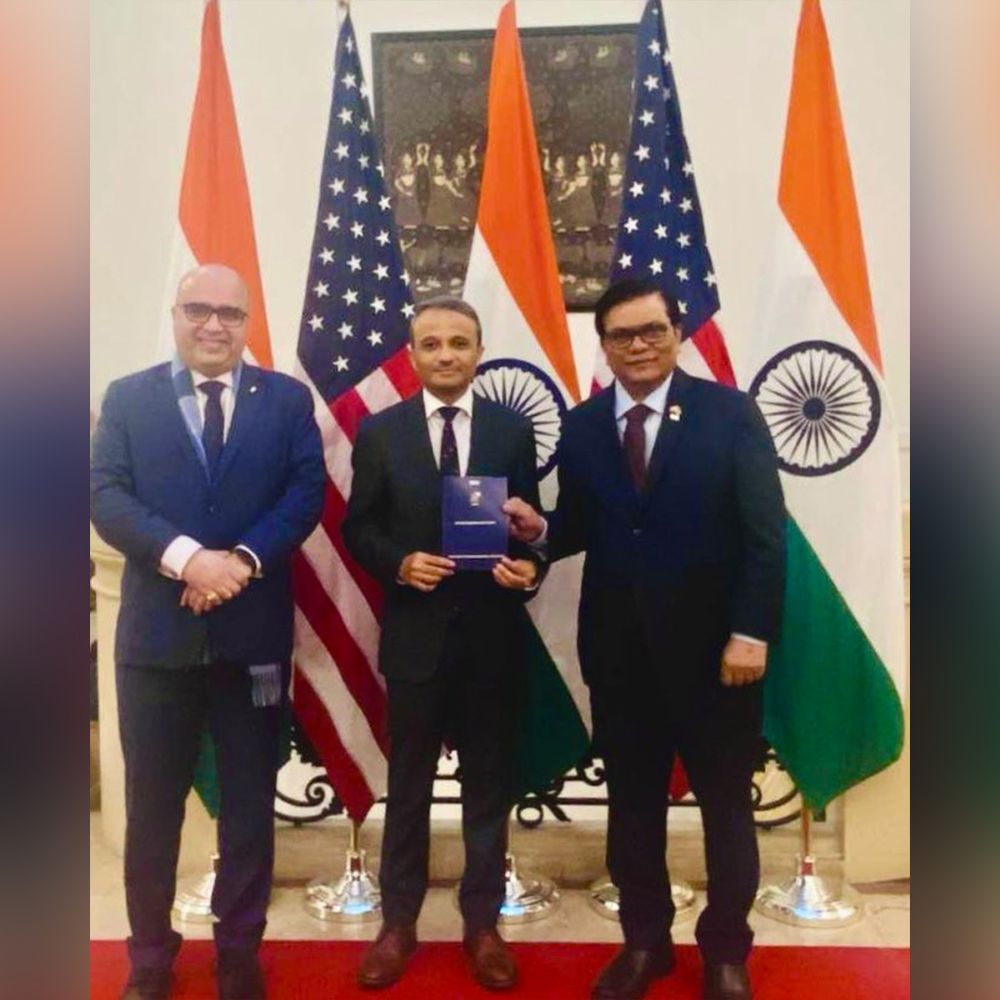
The Consul General’s Case:
India’s growing influence extends well beyond impressive economic statistics. It represents one of the world’s fastest-growing major economies, supported by a large domestic market, political stability and a rapidly expanding middle class. These factors have significantly increased investor confidence and strengthened India’s position as a strategic partner for businesses across multiple sectors. The country’s startup ecosystem has become one of the largest globally, producing innovations in artificial intelligence, financial technology, biotechnology and digital services. Government-led reforms aimed at simplifying regulations, improving ease of doing business and expanding digital infrastructure have further accelerated economic development. Equally significant is the strengthening relationship between India and the United States. Cooperation now extends beyond traditional trade into defence, aerospace, semiconductors, clean energy, healthcare, education and advanced technology. This expanding partnership reflects the growing recognition that both democracies share common strategic and economic interests. As bilateral trade negotiations progress and new avenues of cooperation emerge, businesses on both sides have an opportunity to deepen commercial ties that could shape global economic growth for decades to come.
From Irvine to Pune in 14 Months:
One of the strongest indicators of India’s improving business climate is the growing number of international companies successfully establishing manufacturing facilities within remarkably short timeframes. Global corporations that once hesitated to invest are now expanding production capacities and building long-term operations across the country. This transformation reflects substantial improvements in industrial infrastructure, state-level governance and investment facilitation. Faster project approvals, improved logistics and greater administrative support have made India increasingly attractive for manufacturing companies seeking alternatives within diversified global supply chains. However, successful market entry requires more than capital investment. Companies that have achieved sustainable growth consistently emphasize the importance of building strong local partnerships, understanding regional market dynamics and adopting long-term investment strategies. India’s diversity requires businesses to remain flexible, patient and committed to developing relationships with local stakeholders.
International expansion into India has also demonstrated that overseas investment does not necessarily come at the expense of domestic employment. Many companies continue expanding their operations at home while simultaneously strengthening their presence in India, illustrating how global growth can create opportunities across multiple markets.
Building India’s Infrastructure Backbone:
Infrastructure development has become one of India’s most significant economic achievements over the past decade. Massive investments in highways, railways, airports, ports, industrial corridors and urban transportation systems have transformed connectivity throughout the country. National initiatives designed to integrate road, rail, air and maritime logistics are significantly reducing transportation times and lowering supply chain costs. Faster movement of goods has improved industrial productivity while making Indian manufacturing increasingly competitive in global markets. Urban infrastructure has experienced equally remarkable progress. Metro rail systems, smart cities, modern airports and advanced logistics parks are reshaping India’s metropolitan regions and improving the quality of life for millions of citizens. Alongside physical infrastructure, India has emerged as a global leader in digital transformation. Widespread adoption of digital payments, electronic governance, broadband connectivity and digital public services has created an ecosystem that supports innovation, entrepreneurship and efficient public administration. Growing investments in renewable energy, green hydrogen, electric mobility and advanced manufacturing further demonstrate India’s commitment to building a sustainable economy capable of meeting future environmental and industrial challenges.
The Strategic Importance of U.S.-India Partnership:
The future of global commerce will increasingly depend upon collaboration between major democratic economies that share common values and complementary strengths. India and the United States possess enormous potential to strengthen cooperation across sectors including defence manufacturing, semiconductor production, artificial intelligence, pharmaceuticals, aerospace, clean energy and higher education. Regions such as Southern California illustrate this potential particularly well. Home to world-class aerospace manufacturers, biotechnology companies, defence industries and research institutions, the region offers capabilities that align closely with India’s expanding industrial and technological ambitions. Educational partnerships, research collaborations and skilled workforce exchanges can further deepen bilateral relations while fostering innovation that benefits both nations.
Opportunities and Challenges Ahead:
Despite India’s remarkable progress, businesses must approach the market with realistic expectations. The country’s size and diversity require careful planning, thorough market research and an understanding of regional variations in language, consumer preferences and regulatory environments. Continued reforms aimed at improving judicial efficiency, simplifying regulations, strengthening contract enforcement and enhancing labour productivity will further improve India’s competitiveness. Policymakers must continue creating an investment climate that encourages innovation while ensuring inclusive and sustainable economic growth. At the same time, global businesses should recognize that successful engagement with India requires patience and long-term commitment. Companies seeking immediate returns may struggle, while those investing strategically are likely to benefit from one of the world’s fastest-growing economies.
The Takeaway:
India’s rise represents one of the defining economic developments of the twenty-first century. Its expanding consumer market, technological capabilities, infrastructure development and policy reforms have fundamentally altered global business calculations. For multinational corporations, the question is no longer whether India deserves attention. The more important question is whether companies can afford to remain absent from one of the world’s most dynamic growth markets.
Businesses that have entered India with a long-term vision are already witnessing the benefits of strategic partnerships, improved infrastructure and a rapidly expanding economy. Those that continue to delay investment may find themselves at a competitive disadvantage as global supply chains, innovation networks and international trade become increasingly centred around India’s growth story.
The message for policymakers, investors and entrepreneurs is unmistakable. India has moved beyond being merely an emerging market. It has become a strategic partner, an innovation hub and a major driver of the global economy.
As international commerce continues to evolve, one conclusion stands out with increasing clarity: India is no longer optional—it is essential.