










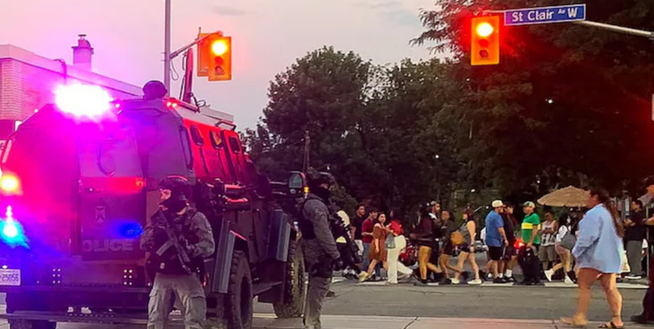
The tragic shooting at Toronto’s Salsa on St. Clair Festival, which left two people dead
and several others injured, has once again shaken Canadians’ sense of security and raised difficult questions about violence in public spaces. What was intended to be a joyful celebration of culture, music and community spirit instead became the scene of unimaginable horror, leaving families devastated and an entire city in mourning.
Community festivals occupy a special place in Canada’s social fabric. They celebrate the country’s rich multicultural heritage, strengthen neighbourhood ties and provide opportunities for people from different backgrounds to come together in an atmosphere of friendship and mutual respect. Whether celebrating cultural traditions, music, food or local history, such events symbolize the diversity that has become one of Canada’s defining strengths.
The attack on the Salsa on St. Clair Festival therefore represents far more than an isolated criminal act. It strikes at the heart of the values these gatherings are meant to uphold—peace, inclusion and community participation. The victims had gathered to celebrate life and culture, not to become victims of violence.
While investigators continue their work to determine the motive behind the shooting and identify all those responsible, Canadians must allow law enforcement agencies to complete a thorough and impartial investigation. Every piece of evidence must be carefully examined so that justice is delivered through the rule of law rather than speculation or public pressure.
Ontario Premier Doug Ford and other leaders have expressed their condolences to the victims’ families and condemned the violence in the strongest terms. Such statements are important in acknowledging the pain experienced by the affected families and reassuring citizens that governments recognize the seriousness of the tragedy. However, public sympathy must be accompanied by meaningful action aimed at preventing similar incidents in the future.
The shooting has once again highlighted concerns surrounding public safety at large gatherings. Every year, Canadian cities host hundreds of cultural festivals, concerts, sporting events and public celebrations that attract thousands of visitors. These occasions contribute significantly to tourism, local businesses and community life. People attend these events expecting to enjoy themselves without fear for their safety. Ensuring that expectation becomes reality requires continuous evaluation of security arrangements. Event organizers, municipal
authorities and police services must work together to assess potential risks, improve emergency response plans and strengthen communication systems without compromising the welcoming atmosphere that defines community festivals. At the same time, it is important to recognize that security measures alone cannot eliminate violent crime. The presence of police officers, surveillance systems and security personnel may deter some criminal activity, but they cannot address the deeper issues that contribute to violence. Long-term solutions require sustained investment in education, youth engagement, mental health services and community development.
Communities where young people have access to educational opportunities, recreational facilities, employment prospects and mentorship programmes are generally better equipped to prevent individuals from drifting toward violence. Local organizations, schools, faith institutions and neighbourhood groups all have important roles to play in building safer communities through early intervention and positive engagement. The availability of illegal firearms remains another significant challenge.
Law enforcement agencies across Canada continue to combat gun trafficking and organized criminal networks responsible for introducing prohibited weapons into communities. Strengthening border security, enhancing intelligence sharing and targeting criminal organizations involved in illegal firearms trafficking remain essential components of any comprehensive public safety strategy.
Canada has long enjoyed an international reputation as one of the safest countries in the world. That reputation has been built upon strong institutions, effective policing and a society committed to peaceful
coexistence. While isolated acts of violence understandably generate public concern, they should not define the character of the nation. Instead, they should strengthen the collective resolve to protect the values that have made Canada a welcoming and secure place for generations. It is equally important to avoid allowing such tragedies to foster fear or division among communities. The Salsa on St. Clair Festival celebrates Latin American culture and brings together people from diverse backgrounds. Acts of violence committed by individuals must never be used to stigmatize entire communities or undermine the spirit of multiculturalism that Canadians have worked hard to build. Canada’s greatest strength has always been its diversity. People from every continent have contributed to the country’s economic development,
scientific achievements, artistic excellence and cultural richness. Festivals celebrating different cultures serve as reminders that diversity is not a weakness but a source of national strength. Protecting these spaces means protecting the values of inclusion, mutual respect and shared citizenship. The emotional impact of such incidents extends far beyond the immediate victims. Families, witnesses, emergency responders and local residents often carry psychological scars long after the physical evidence has disappeared. Governments and community organizations must therefore ensure that counselling services and victim-support programmes remain available to those affected by traumatic events. Media organizations also bear an important responsibility. Reporting should remain factual, balanced and sensitive to the victims and their families. Sensationalism may generate attention, but responsible journalism helps inform the public without contributing to unnecessary fear or misinformation. At moments of tragedy, accuracy and restraint are essential.
Political leaders, too, must resist the temptation to use such incidents for partisan advantage.
Public safety is not a partisan issue. It is a shared responsibility requiring cooperation between all levels of government, law enforcement agencies and civil society. Lasting solutions emerge through evidence-based policymaking rather than political rhetoric.
As the investigation continues, Canadians will rightly seek answers about how this tragedy occurred and what measures can reduce the likelihood of similar incidents in the future. Those questions deserve careful consideration. However, the immediate priority must remain supporting the victims, assisting grieving families and ensuring that those responsible are brought to justice.
The tragedy at Toronto’s Salsa on St. Clair Festival is a painful reminder that peace and public safety can never be taken for granted. Every life lost to senseless violence diminishes an entire community. Yet history has repeatedly shown that Canadians respond to such moments not with surrender, but with compassion, resilience and determination.
As communities across the country reflect on this heartbreaking event, the nation must reaffirm its commitment to creating public spaces where families can gather without fear, cultural celebrations can flourish without intimidation, and diversity can continue to be celebrated in safety and harmony. That commitment is not only a tribute to those whose lives were tragically cut short—it is the strongest statement that violence will never define Canada’s future.