










In a year that reshaped India’s confidence at home and its standing abroad, Prime Minister Narendra Modi emerged as the most consequential leader of 2025, driving growth, power, and purpose across economy, security, diplomacy, and culture.
Our Editorial Board
New York / New Delhi
By the end of 2025, Narendra Modi stood not merely as India’s Prime Minister, but as the central force shaping the country’s national trajectory. The year marked a culmination of long-term political authority, administrative momentum, and strategic ambition. From deep economic reforms to decisive military action, from space milestones to cultural assertion, Modi’s imprint was unmistakable. Few leaders anywhere matched the breadth of influence he exercised across domains — and fewer still did so with such sustained political legitimacy.
At the core of Modi’s 2025 leadership was a push for what his government described as “mega reforms.” The most striking was the overhaul of India’s tax architecture. The Income Tax Act, 2025 replaced the six-decade-old 1961 legislation, raising the tax-free income threshold from ₹7 lakh to ₹12 lakh. The reform was framed as both relief and stimulus — easing the burden on the middle class while boosting consumption. Alongside it came a major simplification of the Goods and Services Tax, compressed into a two-slab structure of 5% and 18%, a move that sought to reduce compliance friction and energies domestic demand.
Equally consequential was the full implementation of four consolidated Labor Codes, modernizing India’s workforce framework and signaling a shift toward formalization and flexibility. For businesses, especially small and medium enterprises, the government raised MSME turnover limits to ₹100 crore and opened the insurance sector to 100% foreign direct investment. These measures reflected Modi’s continuing bet that growth would be driven by scale, efficiency, and integration with global capital.
Perhaps the most strategically significant reform came with the passage of the SHANTI Bill, 2025, which allowed private and foreign participation in civilian nuclear energy projects. Framed as essential to India’s clean energy transition, the move broke long-standing policy taboos and underscored Modi’s willingness to recalibrate legacy positions in pursuit of long-term capacity.
India’s digital transformation — one of Modi’s signature legacies — reached a new peak in 2025. Unified Payments Interface (UPI) transactions crossed 18 billion a month by mid-year, accounting for nearly half of the world’s real-time digital payments. What began as a domestic financial inclusion tool had, by 2025, become a global benchmark for public digital infrastructure, reinforcing India’s claim to leadership in digital governance.
If economic reforms shaped India’s internal momentum, national security defined its external posture. In May 2025, following the terror attack in Pahalgam, Indian forces carried out Operation Sindoor, precision strikes that destroyed terror infrastructure across the border in Pakistan. The operation was swift, calibrated, and politically unambiguous. As Modi later said in his Mann Ki Baat address, the world saw clearly that “today’s India does not compromise on its security.” Operation Sindoor became both a military statement and a political signal — deterrence backed by resolve.
Prime Minister Narendra Modi provided firm political leadership during Operation Sindoor, setting clear red lines on national security after the Pahalgam terror attack. He authorized a swift, precise, and calibrated military response, reinforcing India’s doctrine of zero tolerance toward terrorism.
Defense modernization continued alongside operational assertiveness. Modi unveiled Mission Sudarshan Chakra, an AI-driven next-generation missile defense system, reinforcing India’s push toward indigenous, technology-led security capabilities. The emphasis was not only on strength, but on self-reliance — a recurring theme of Modi’s governance.
Science and space offered another arena where India broke new ground. In June 2025, Group Captain Shubhanshu Shukla became the first Indian to reach the International Space Station, a moment that symbolized India’s arrival as a serious human spaceflight power. ISRO also successfully launched its heaviest satellite to date, a 6.1-tonne payload, using the LVM3 rocket. These achievements were not isolated triumphs; they were framed by Modi as stepping stones toward a future where India would be a permanent presence in advanced space exploration.
Modi’s foreign policy in 2025 was marked by visibility, honors, and deal-making. He received several of the world’s highest civilian awards, including Brazil’s Grand Collar of the National Order of the Southern Cross, along with top honors from Sri Lanka, Mauritius, and Oman. These recognitions reflected not just personal stature, but India’s enhanced diplomatic weight.
Trade diplomacy reinforced that standing. Landmark agreements such as the India–UK Comprehensive Economic and Trade Agreement and the India–Oman Comprehensive Economic Partnership Agreement expanded India’s role as a global trade hub at a time of fractured supply chains and geopolitical uncertainty. Modi’s message was consistent: India would engage the world on its own terms, guided by national interest and strategic autonomy.
Culture and sport added a powerful emotional dimension to the year. 2025 became a golden chapter for Indian sport. The men’s cricket team won the ICC Champions Trophy, the women’s team lifted their first-ever World Cup, and India also claimed the Women’s Blind T20 World Cup. Para-athletes delivered medal-winning performances across world championships, reinforcing narratives of resilience and inclusion. Modi repeatedly highlighted these achievements as evidence of a confident, aspirational India.
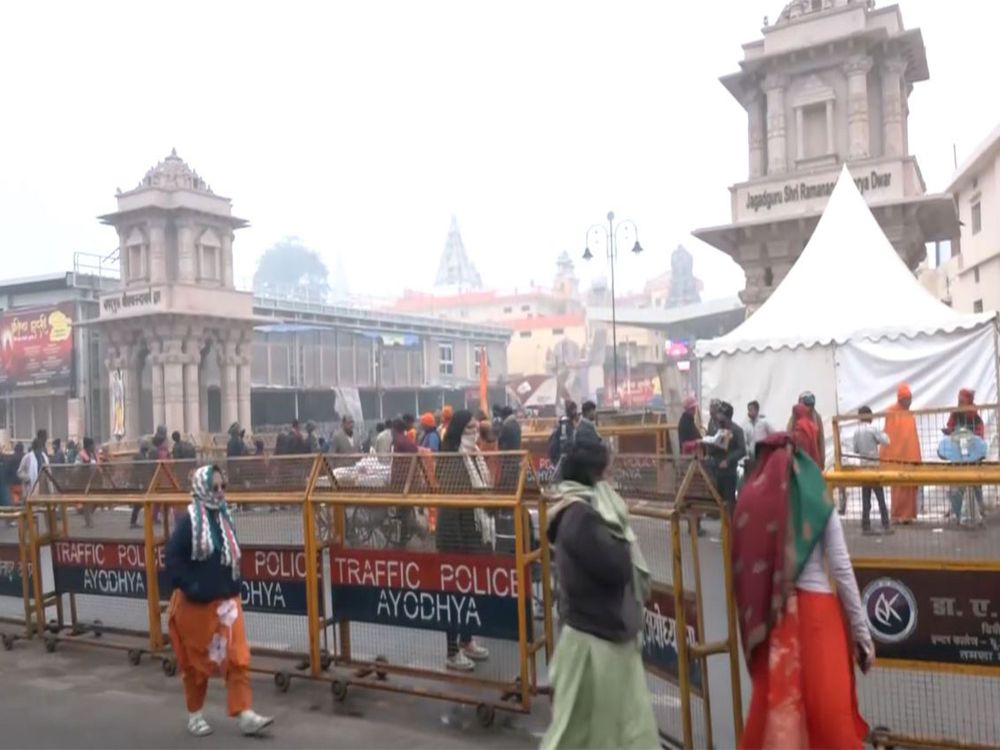
Faith and heritage occupied a central place as well. The global organization of the Prayagraj Maha Kumbh at the start of the year drew worldwide attention, blending scale, spirituality, and state capacity. At year’s end, the final completion and flag-hoisting ceremony at the Ram Mandir in Ayodhya became a moment of deep symbolic resonance, closing a long chapter in India’s political and cultural history.
On July 25, 2025, Modi crossed another milestone, becoming the second longest-serving Prime Minister of India, surpassing Indira Gandhi’s record of 4,077 consecutive days in office. Longevity, in his case, was not merely a statistic; it reflected electoral dominance, narrative control, and the absence of a credible national challenger.
In his year-end Mann Ki Baat address, Modi described 2025 as a year that gave India “even greater self-confidence.” He spoke of security, science, sport, culture, and collective pride, while also acknowledging natural disasters and loss. The tone was reflective yet forward-looking — a leader consolidating achievement while preparing the ground for the next phase.
By any measure, Narendra Modi was the most important person of 2025 in India. His leadership touched every major axis of national life — economy, military power, diplomacy, technology, and culture. More than individual policies or events, it was the cumulative effect that defined the year: an India more assertive, more visible, and more self-assured than before. As the country prepared to step into 2026, it did so with Modi firmly at the center of its story.