












In 2025, India’s foreign policy under Prime Minister Narendra Modi projected confidence, autonomy and reach, as New Delhi engaged all major powers while placing its national interest firmly at the center of diplomacy
Shobhan Saxena

The year 2025 marked a phase of consolidation for Indian foreign policy. Having emerged from a domestic election cycle, New Delhi returned to the global stage with renewed diplomatic energy, led personally by Prime Minister Narendra Modi. The thrust was clear: India would engage with the entire world, resist alignment traps, and pursue partnerships that advanced its economic, strategic and geopolitical interests. In an era of global uncertainty, India chose balance over binaries and autonomy over dependence.
At the heart of this approach was Modi’s continued personal leadership of foreign policy. His extensive travel across Europe, West Asia, Africa, the Americas and Asia reinforced a pattern established over the past decade — that India’s diplomacy would be leader-driven, visible and outcome-oriented. From Paris and Washington early in the year to BRICS capitals, the Indian Ocean neighborhood and West Asia toward its close, Modi sought to position India as a consequential power that speaks to all sides.
A defining achievement of 2025 was India’s ability to sustain engagement with virtually every major geopolitical bloc. Even as global politics hardened into competing camps, India resisted exclusivity. It deepened ties with Europe through trade and technology cooperation, expanded its footprint in Africa and Latin America, reinforced its presence in the Indo-Pacific, and sustained robust engagement with West Asia, a region central to India’s energy security and diaspora interests. This breadth of outreach underscored India’s claim to being a genuinely global actor rather than a regional power with selective partnerships.
National interest, rather than ideological alignment, remained the guiding principle. This was most evident in India’s energy and economic diplomacy. Despite mounting external pressure, India continued to prioritize affordable energy access for its population, maintaining strong economic ties with Russia. Russian crude remained a key stabilizer of India’s energy basket, insulating the domestic economy from global price volatility. New Delhi made it clear that decisions affecting its growth trajectory would not be outsourced to external capitals.
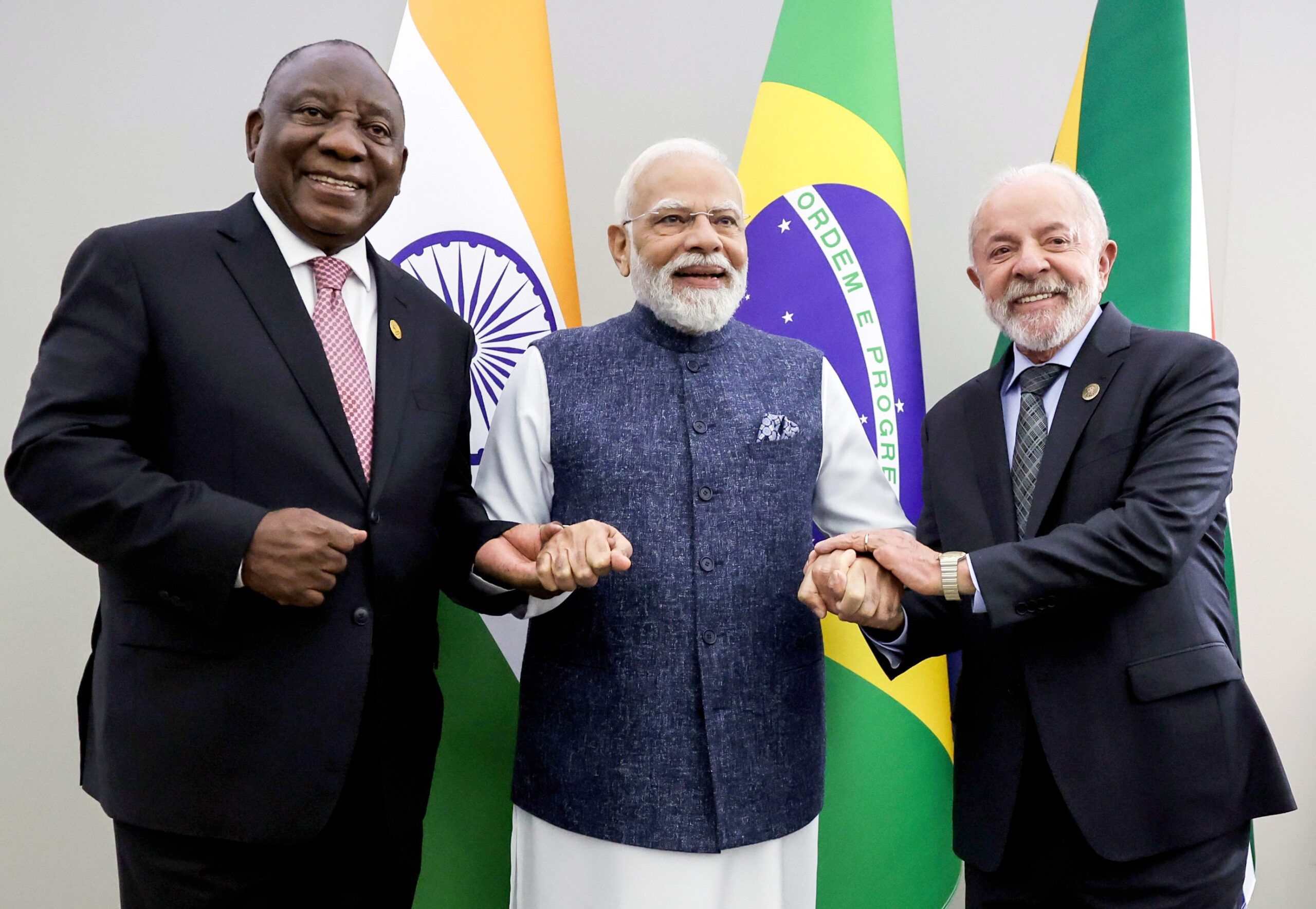
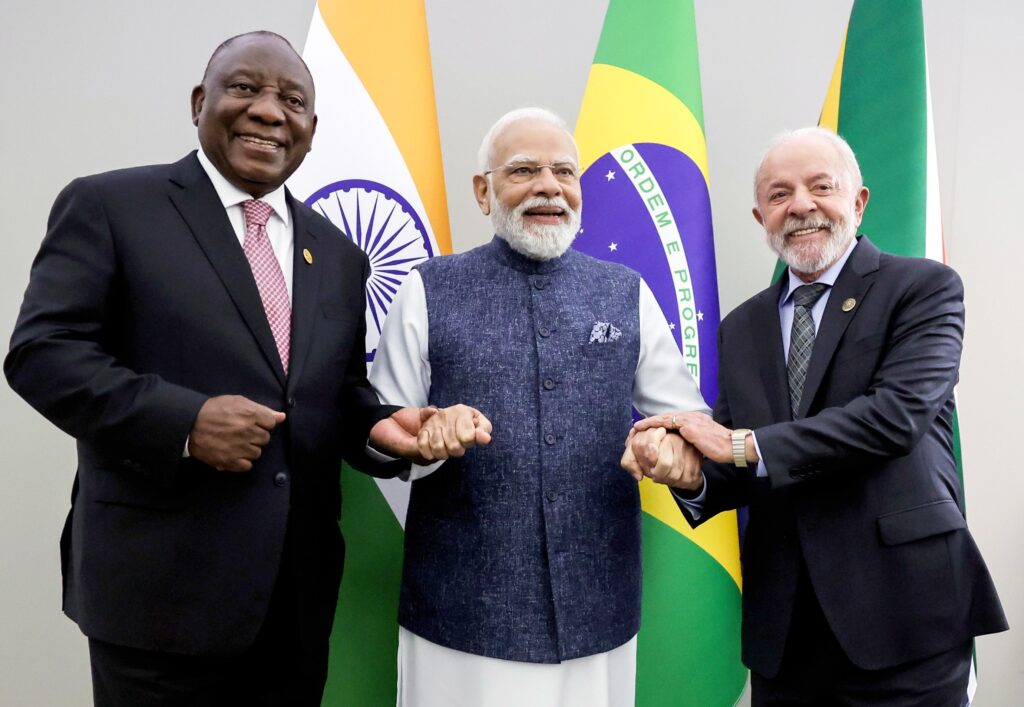
India’s role within BRICS in 2025 further reflected this strategic autonomy. As the grouping evolved into a broader platform for emerging economies, India played a stabilizing role, advocating multipolarity without confrontation. New Delhi pushed for pragmatic cooperation in trade, development finance, technology and institutional reform, even as internal differences within BRICS persisted. India’s approach emphasized reforming global governance from within rather than dismantling existing systems — a position that resonated with many countries of the Global South.
Crucially, India managed its relationships with Russia and China with calibrated realism. With Russia, the partnership remained resilient, anchored in defense cooperation, energy trade and shared interests in a multipolar world. While the relationship faced external scrutiny, India demonstrated that it could sustain strategic ties without becoming politically beholden.
Engagement with China was more complex but equally deliberate. In 2025, New Delhi maintained dialogue with Beijing despite unresolved border tensions. High-level meetings and functional cooperation signaled that India was willing to manage competition without allowing it to spiral into conflict. The message was unmistakable: differences would not preclude dialogue, and deterrence would coexist with diplomacy.
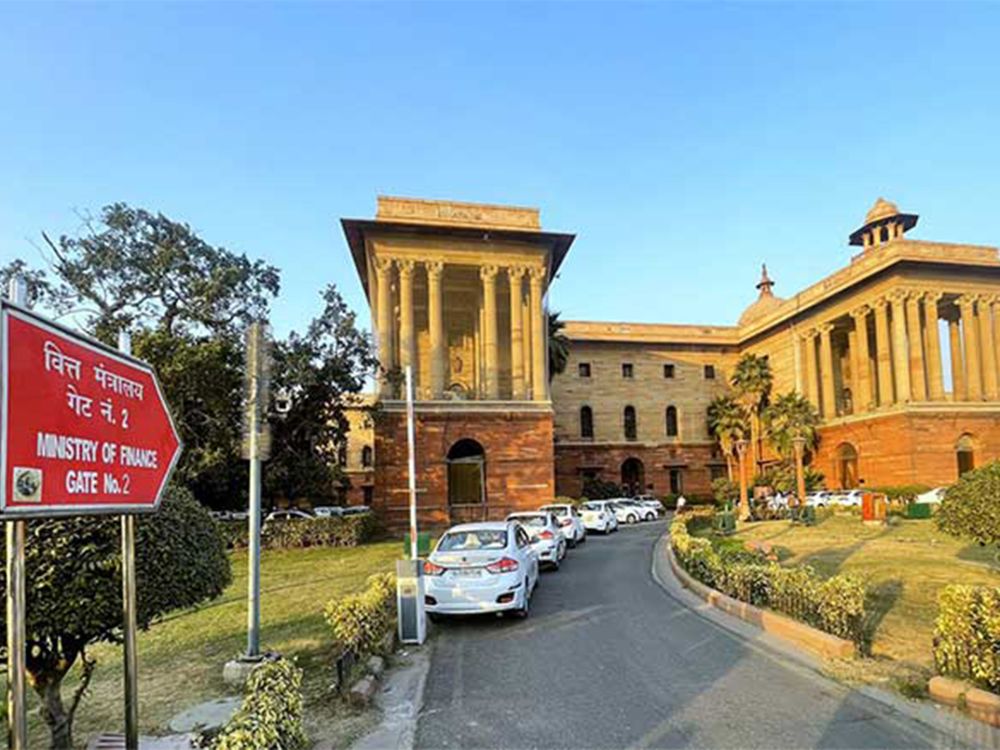
Perhaps the most delicate balancing act of the year was India’s handling of the United States, particularly on trade and tariffs. Under a more transactional Washington, India faced pressure on market access and economic policy. Yet New Delhi resisted both escalation and capitulation. While defending its domestic industries against punitive tariffs, India kept channels open for negotiation, signaling its readiness for a balanced trade framework that respected mutual interests. This steady approach prevented the relationship from becoming adversarial, even amid friction.
Importantly, India’s engagement with the US in 2025 reaffirmed a mature partnership rather than a dependent alliance. Defense cooperation, technology collaboration and people-to-people ties continued, but New Delhi made it clear that strategic convergence did not imply automatic policy alignment. This ability to disagree without disengaging reflected a new confidence in India’s diplomatic posture.
Beyond major power politics, India also invested in its image as a partner of choice for the Global South. Development cooperation, capacity building, digital public infrastructure and cultural diplomacy featured prominently in Modi’s engagements across Africa, the Caribbean and Latin America. These efforts reinforced India’s narrative as a country that shares its growth experience rather than prescribes solutions.
Taken together, India’s foreign policy achievements in 2025 lay not in dramatic breakthroughs but in sustained positioning. In a fragmented world marked by wars, economic coercion and shifting alliances, India demonstrated that it could engage all sides, absorb pressure, and still retain policy autonomy. Modi’s leadership ensured continuity, visibility and intent, even as outcomes were shaped by global constraints.
As India moves forward, the significance of 2025 may well lie in how firmly it established itself as a power that cannot be boxed in — a country that negotiates, hedges, resists and cooperates, always with its national interest as the final arbiter. In an unsettled international order, that may be India’s most enduring diplomatic asset.